Blog

Canadian Carnegie Classification for Community Engagement (C4E)

The Canadian Carnegie Classification for Community Engagement (C4E) is a pan-Canadian adaptation of the U.S.-based Carnegie Elective Classification for Community Engagement, with an aim to establish a recurring, evidence-based classification process to recognize meaningful and reciprocal community engagement across post-secondary institutions in Canada.
Launched in March 2024 as a joint venture between McMaster University, the Saskatchewan Indian Institute of Technologies (SIIT), Simon Fraser University (SFU), and Université de Montréal, the initiative benefited from the early leadership of SIIT and SFU before their withdrawal in early 2025. Between 2024 and fall 2025, McMaster served as the administrative home. The C4E also received strategic guidance from the American Council on Education, Carnegie Foundation for the Advancement of Teaching, and a 16-member Steering Committee representing Canadian post-secondary institutions (publicly funded universities, colleges, institutes, cégeps, and polytechnics from across the country, including linguistic profiles), national associations, community engagement organization, and international cohorts of the Carnegie Electives Classification for Community Engagement.
The C4E has achieved several significant milestones:
  • Establishing a 16-member Steering Committee to guide strategic direction;
  • Developing a bilingual application and guidebook tailored to the Canadian context, including commitments to the Truth and Reconciliation Commission’s Calls to Action, OCAP® principles, francophone considerations, and institutional diversity across the sector;
  • Completing branding that reflected both the relationship to the Carnegie Foundation and the distinctiveness of the Canadian adaptation;
  • Sharing progress through national conference presentations; and
  • Advancing outreach and relationship-building with Indigenous and francophone partners.
These accomplishments contributed to laying the foundation for a robust framework that would support institutions in documenting community-engaged teaching, learning, and research, and in reflecting on civic learning outcomes and supports for community-engaged scholarship.
Following a period of substantial progress and reflection, McMaster and Université de Montréal agreed in fall 2025 to step away as the Joint Venture hosts of the C4E while exploring options for a future host institution. With this decision, the C4E is no longer active.
McMaster and Université de Montréal remain grateful for the early leadership of SIIT and SFU and the ongoing contributions of the American Council on Education, the Carnegie Foundation, and the Steering Committee. Any future updates or new hosting arrangements, if pursued by others, will be shared by the relevant parties.
La Classification Carnegie canadienne pour l’engagement communautaire (C4E) était une adaptation pancanadienne de la Classification élective Carnegie pour l’engagement communautaire, basée aux États-Unis. L’objectif de cette initiative canadienne était d’établir un processus de classification récurrent et fondé sur des données probantes afin de reconnaître l’engagement communautaire significatif et réciproque dans les établissements d’enseignement postsecondaire au Canada.
Lancée en mars 2024 sous la forme d’une coentreprise entre l’Université McMaster, le Saskatchewan Indian Institute of Technologies (SIIT), l’Université Simon Fraser (SFU) et l’Université de Montréal, le consortium a bénéficié de l’expertise  des équipes du SIIT et de SFU avant leur retrait au début de l’année 2025. Entre 2024 et l’automne 2025, l’Université McMaster a assuré la gestion administrative du projet. Le C4E a également pu compter sur les conseils stratégiques de l’American Council on Education, de la Carnegie Foundation for the Advancement of Teaching ainsi que sur un comité de pilotage composé de 16 membres représentant les établissements d’enseignement supérieur canadiens (universités, collèges, instituts, cégeps et écoles polytechniques publics de tout le pays, y compris les profils linguistiques), les associations nationales, les organisations d’engagement communautaire et les cohortes internationales de la Carnegie Electives Classification for Community Engagement.
Au cours de sa période d’activité, l’équipe responsable du déploiement de la C4E a franchi plusieurs étapes importantes :
  • Mise en place d’un comité de pilotage composé de 16 membres chargés de définir l’orientation stratégique ;
  • Élaboration d’un formulaire de candidature et d’un guide bilingue de mise en candidature adaptés au contexte canadien, incluant des engagements envers les appels à l’action de la Commission de vérité et réconciliation, les principes OCAP®, les considérations francophones et la diversité institutionnelle dans l’ensemble du secteur ;
  • La création d’une identité visuelle reflétant à la fois la relation avec la Fondation Carnegie et le caractère distinctif de la version canadienne de la classification ;
  • Le partage des avancées du projet lors de présentations à des conférences nationales ;
  • La sensibilisation à l’établissement de partenariats aux bénéfices mutuels avec les partenaires autochtones et francophones.
Ces réalisations ont contribué à jeter les bases d’un cadre solide qui aiderait les établissements à documenter l’enseignement, l’apprentissage et la recherche axés sur l’engagement communautaire, et à réfléchir à leurs retombées sur les communautés.
Après une période de progrès et de réflexions importantes, McMaster et l’Université de Montréal ont convenu à l’automne 2025 de suspendre leur implication sur le projet. À la suite de cette décision, la C4E n’est plus active à l’heure actuelle.
L’Université McMaster et l’Université de Montréal saluent la contribution exceptionnelle apportée par le Saskatchewan Indian Institute of Technologies et l’Université Simon Fraser dans le développement du projet, ainsi que l’implication indéfectible des équipes de l’American Council on Education, de la Carnegie Foundation ainsi que des membres du comité de pilotage. Toute communication relative à une éventuelle reprise de l’initiative de la C4E sera effectuée par les parties concernées.
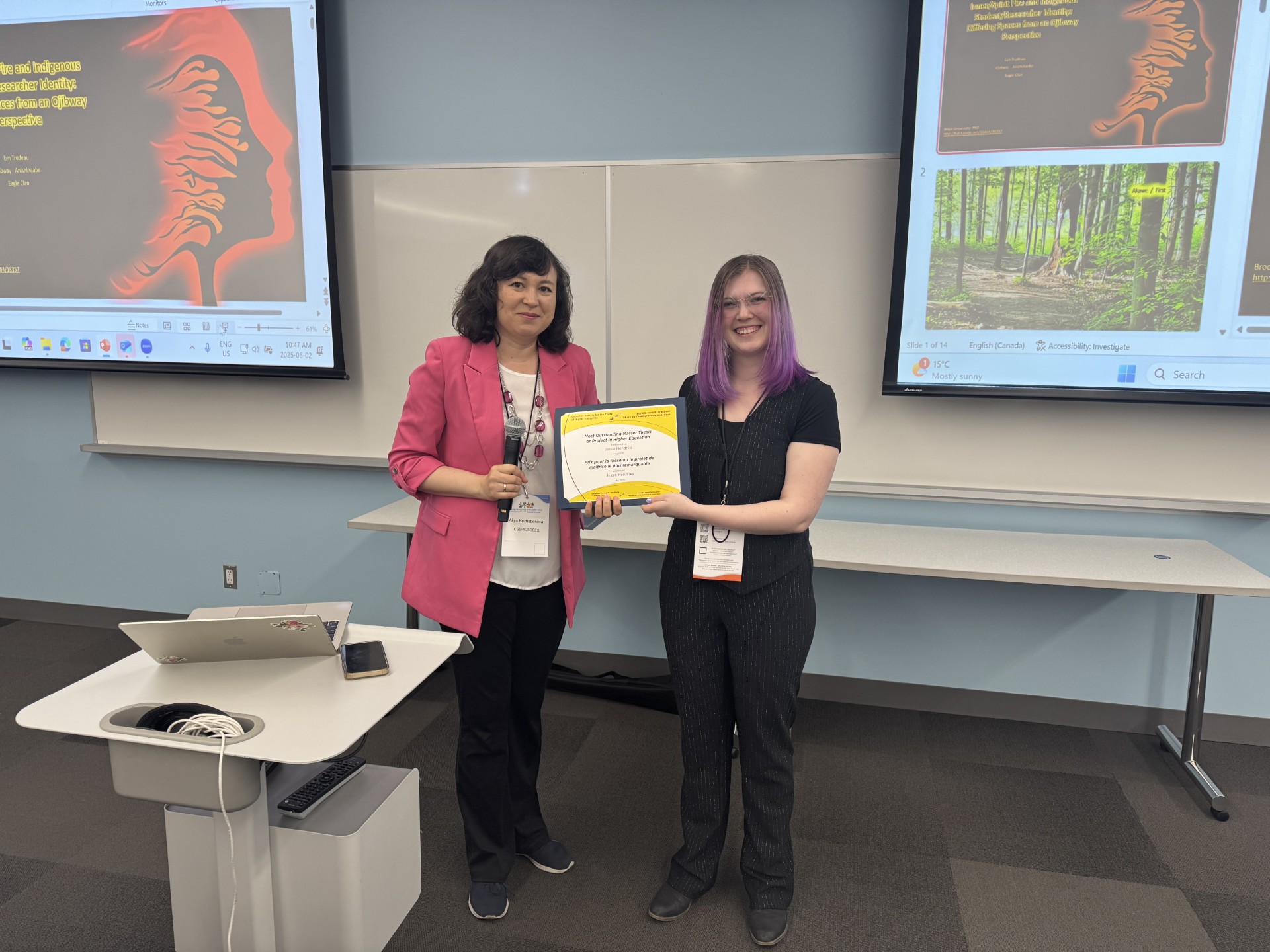
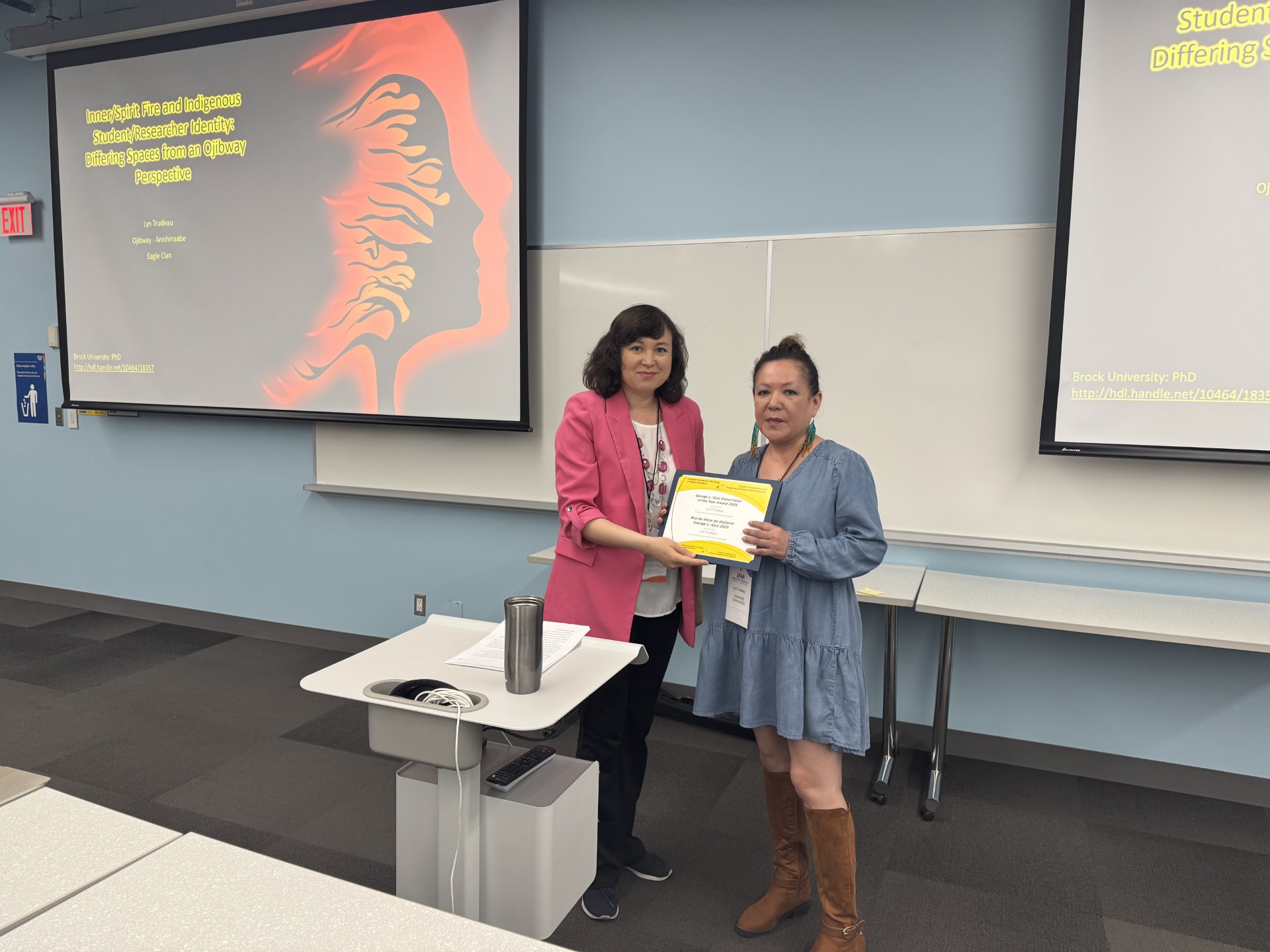
Celebrating the CSSHE 2025 Award Recipients

Congratulations again to our 2025 Award recipients!

The submissions for the CSSHE 2026 awards are now live until December 31. Please visit the Awards pages to see the award description, criterion, and nomination process.

Master’s Award – Jessie Hendriks, Brock University
Geis Dissertation Award – Dr. Lyn Trudeau, Brock University
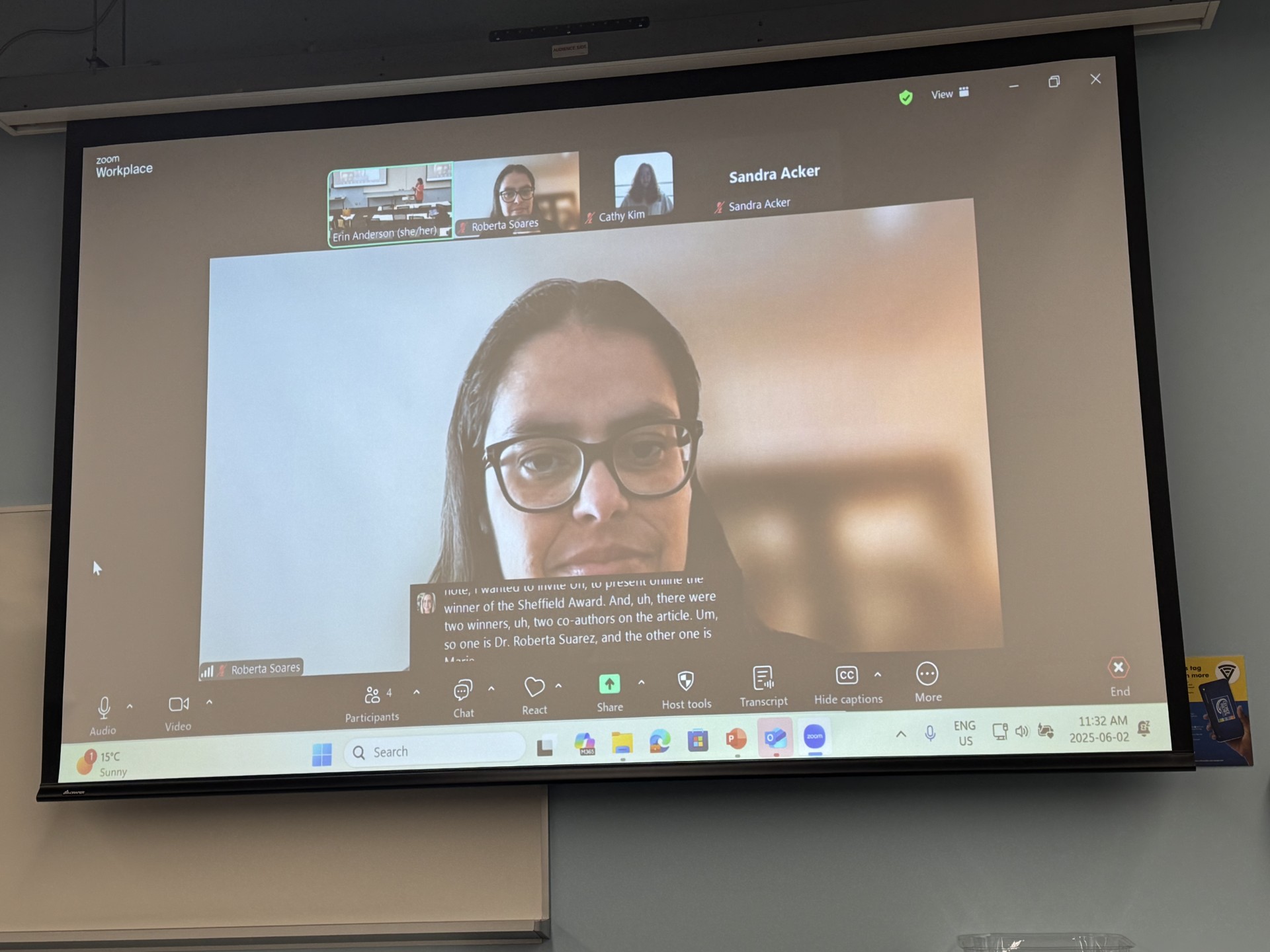
CJHE Sheffield Award – Roberta de Oliveira Soares & Marie-Odile Magnan
Research and Scholarship Award – Dr. Stephanie Waterman


2026 Conference Call for Proposals

Dear CSSHE community,

We are writing to share exciting news about our next Annual Conference. The conference will be hosted in Winnipeg, Manitoba from May 31 to June 3, 2026.

The Call for Proposals is now live until December 15, 2026 at 11:59 p.m. Central time.

Please direct all questions or requests for more details to cssheconference[at]gmail.com.

Update on CSSHE 2026

Dear CSSHE community,

We are writing to share exciting news about our next Annual Conference. The conference will be hosted in Winnipeg, Manitoba from May 31 to June 3, 2026. The theme will be Centering Human Rights and Equity in Education: Advancing Dialogue and Strengthening Relationships. We plan to make our Call for Proposals in early October.

Although the Federation for the Humanities and Social Sciences will not be hosting Congress in 2026, we will be partnering with the Canadian Society for the Study of Education (CSSE) to plan and deliver the conference.

Planning is still preliminary. We are envisioning a virtual segment held prior to the in-person event with a focus on graduate students and early career scholars.

Finally, a bit about ourselves as your conference co-chairs. Christos is affiliated with OISE/University of Toronto and is studying ethical decision-making in the administration of AI university chatbots. Jessy is affiliated with Western Illinois University (but living in Canada!) and is studying the neoliberalization of higher education through the lens of strategic planning. We are both in the final year of our doctoral studies. Christos is a newly elected member of the CSSHE Board of Directors and Jessy was a part of the 2025 Conference Committee. This will be our fourth and third CSSHE conference, respectively.

We look forward to receiving your input, and to welcome you to the conference! If you have questions, please feel free to email us.

CSSHE Annual Conference 2025 Call for Proposal | Appel de propositions pour la Conférence annuelle du SCÉES 2025

The Call for Proposal submissions for the CSSHE Annual Conference 2025 is now open. We are excited that this year’s conference will be at George Brown College in Toronto, ON on the Waterfront and St. James campuses. Please see the document below or follow this link to find our Call for Proposals.

CSSHE 2025 Call for Proposals – EN

We have made some changes to this year’s proposal submission process, so please read the Call for Proposals carefully for details. In particular, we are using a new platform, Fourwaves Abstract Management Portal, for submissions, reviews, and program scheduling.The submission portal is open until 23:59 EST on December 15, 2024. This year we have provided an extra two weeks longer than previous years and will not be accepting late submissions. Please feel free to share this Call widely with your colleagues and communities in higher education and related fields.

We are also recruiting more volunteer members for the conference committee. If interested, please email cssheconference@gmail.com. Committee volunteers play an integral role in supporting the planning of the conference, particularly in assisting with the review process, selecting and coordinating keynote speakers and presenters, and organizing networking sessions. We seek to recruit participants from diverse backgrounds and geographical locations to create a supportive network in planning for this year’s conference.

Please direct all questions or requests for more details to cssheconference@gmail.com.

Thank you, and we look forward to seeing you at George Brown next May!

Erin Anderson & Kathleen Matheos

CSSHE 2025 Conference Co-Chairs

cssheconference@gmail.com


Les soumissions d’appel de propositions pour la Conférence annuelle de la SCÉES 2025 sont maintenant ouvertes. Nous sommes ravis que la conférence de cette année se tienne à George Brown College à Toronto. Veuillez consulter le document ci-dessous ou suivre ce lien pour trouver notre appel de propositions.

CSSHE-SCEES 2025 Appel de Propositions – FR

Nous avons apporté quelques changements au processus de soumission des propositions de cette année, veuillez donc lire attentivement l’appel à propositions pour plus de détails. En particulier, nous utilisons une nouvelle plateforme, Fourwaves Abstract Management Portal, pour les soumissions, les révisions et la programmation du programme. Le portail de soumission est ouvert jusqu’à 23:59 heure de l’ést le 15 décembre 2024. Cette année, nous avons prévu deux semaines supplémentaires par rapport aux années précédentes et nous n’accepterons pas les soumissions tardives. N’hésitez pas à diffuser largement cet appel auprès de vos collègues et de vos communautés dans l’enseignement supérieur et les domaines connexes.

Nous recrutons également plus de membres du comité de conférence. Si vous êtes intéressé, veuillez envoyer un courriel à cssheconference@gmail.com. Les bénévoles du Comité jouent un rôle essentiel dans la planification de la conférence, en particulier dans le cadre du processus d’examen, la sélection et la coordination des conférencières et des conférenciers et l’organisation de séances de réseautage. Nous cherchons à recruter des participantes de divers milieux et lieux géographiques afin de créer un réseau de soutien pour la planification de la conférence de cette année.

Veuillez adresser toutes questions ou demandes de renseignements à cssheconference@gmail.com.

Merci, nous avons hâte de vous rencontrer à George Brown en mai prochain!

Erin Anderson et Kathleen Matheos

SCÉES 2025 Coprésidentes de la conférence

cssheconference@gmail.com

NEWS: Announcement concerning the CJHE | Annonce concernant la RCES

The Board of Directors of the Canadian Society for the Study of Higher Education is delighted to announce that Dr. Michelle McGinn, Brock University, has been appointed as the Interim Editor-in-Chief of the Canadian Journal of Higher Education (CJHE) and Sharon Hu, British Columbia, has been appointed as the Managing Editor.

Michelle McGinn Michelle K. McGinn is Acting Vice-President, Research and Professor of Education at Brock University, St. Catharines, Ontario, Canada. She holds a PhD in Curriculum Theory and Implementation from Simon Fraser University and a certificate in Research Administration from Mohawk College. Her primary interests include research collaboration, researcher development, scholarly writing, mentorship, and ethics in academic practice for graduate students and established scholars. She is a co-investigator on the “Academic Researchers in Challenging Times” project funded by the Social Sciences and Humanities Research Council of Canada to explore the careers, practices, and identities of social science scholars and research administrators (see arictproject.com). She is a long-time member of the Canadian Society for the Study of Higher Education, including a past term on the Board of Directors (2017–2019).


Sharon Hu Sharon Hu has managed various Canadian journals since 2009. Her role is to ensure a smooth process for the review, layout, and dissemination of the articles. Outside of her work with the CJHE, Sharon is an experienced instructional designer specializing in using media and interactive activities to create impactful online learning experiences.

Le conseil d’administration de la Société canadienne pour l’étude de l’enseignement supérieur a le vif plaisir d’annoncer que Michelle McGinn, Ph. D., de l’Université Brock, a été nommée rédactrice en chef intérimaire de la Revue canadienne d’enseignement supérieur (RCES) et que Sharon Hu, de l’Université de la Colombie-Britannique, a été nommée gestionnaire de la revue.

Michelle McGinn Michelle K. McGinn est vice-présidente intérimaire à la recherche et professeur de pédagogie à l’Université Brock, à St. Catharines, en Ontario. Elle est titulaire d’un doctorat en théorie et mise en œuvre du curriculum, qu’elle a obtenu à l’Université Simon Fraser, et d’un certificat en administration de la recherche du Collège Mohawk. Ses principaux champs d’intérêt comprennent la recherche collaborative, le perfectionnement des chercheurs et chercheuses, la rédaction scientifique, le mentorat et l’éthique dans les pratiques universitaires pour la communauté étudiante aux cycles supérieurs et les chercheuses et chercheurs établis. Elle est cochercheuse dans le cadre d’un projet financé par le Conseil de recherches en sciences humaines; intitulé Academic Researchers in Challenging Times, il explore les carrières, les pratiques et les identités des chercheurs et chercheuses dans le domaine des sciences humaines ainsi que des administrateurs et administratrices de recherche (voir arictproject.com). Membre de longue date de la Société canadienne pour l’étude de l’enseignement supérieur, elle a fait partie de son conseil d’administration de 2017 à 2019.


Sharon Hu Sharon Hu gère diverses revues canadiennes depuis 2009. Elle se voit maintenant confier le rôle d’assurer une transition en douceur pour ce qui est de l’évaluation, de la mise en page et de la distribution des articles. Outre son travail pour la RCES, Sharon est une conceptrice pédagogique chevronnée, spécialisée dans l’utilisation des médias et d’activités interactives pour créer des expériences d’apprentissage en ligne percutantes.

2022 CSSHE Research and Scholarship Award

Congratulations to Roopa Desai Trilokekar of York University, this year’s winner of the Research and Scholarship Award!

This award recognizes research and scholarship on higher education and/or topics directly relevant to Canadian higher education which can include the socio-political context, access, governance, teaching and learning, institutional studies, or education and employment.

This award is conferred on a mid-career professional who is nominated by their colleagues, and focuses on their most recent 5 years of publications. Click here to read more about the award.

You can read more about Dr Trilokekar on the YorkU website, and find her publications here.

2022 Award for Master’s Thesis or Project

Congratulations to Christina Arayata, the winner of the 2022 Award for her outstanding Master’s Thesis: Identity navigation and understanding in demographic surveys!

CSSHE sponsors an annual award for the outstanding Master’s thesis or project in Canadian universities in the area of higher education. Recipeints’ work focuses on topics in higher education relevant to Canada, including the societal context, access, organization and governance, teaching and learning, institutional studies, or education and employment. Read more about the award here.